
Buying the right size girls trainers can feel harder than it should be. Children can grow quickly, which means you may think you’ve found a pair of shoes that fits perfectly, then they don’t. When browsing for new shoes online, you will be met with a lot of different brands and different sizing systems. It’s easy to feel unsure about what size to buy. However, choosing the correct size really does matter, not only for comfort, but also for your child’s healthy development.
Why the Right Size Matters
Children’s feet are still developing, so wearing the wrong size trainers can cause problems over time. Shoes that are too small can squeeze the foot and therefore lead to pain and discomfort. Alternatively, shoes that are too big can make walking unsteady and cause trips and falls. Young children don’t always know how to explain what feels wrong. They might say their shoes just feel “funny”. When trainers fit properly, kids can move better and stay comfortable throughout the day. The right size helps them join in with games, sports and school activities.
Understanding Girls’ Trainer Sizing
The majority of trainers will be in UK, EU or US sizes. However, beware, these sizes do not all match up. For example, a UK size 10 might be an EU 28 or a US 11.5, depending on the brand. Even trainers of the same size can fit differently because every company designs their shoes in its own way. Some sports brands make running trainers slightly smaller for better performance. Some brands make shoes that are more casual for everyday wear. For this reason, guessing based on old shoes doesn’t always work. The best approach is to measure your child’s feet every time and check the size guide for the brand you’re buying.
How To Measure Kids’ Feet at Home
Measuring your child’s feet at home is simple and only takes a few minutes. All you need is a piece of paper, a pencil and a ruler. It’s best to measure in the afternoon when feet are naturally a little bigger. Place the paper on a flat surface and ask your child to stand with their weight evenly on both feet. Trace around each foot, then measure from the heel to the longest toe. Always choose the size based on the bigger foot. It is also advised to add about one centimetre of extra space to allow for comfort and growth. You may also want to measure the width of the feet, too. This is the widest part of the foot, usually situated around the ball of the foot.
How To Use A Children’s Shoe Size Guide
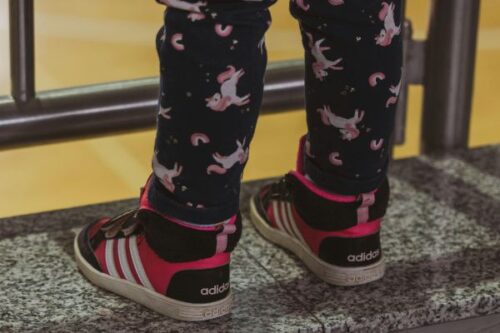
Use these measurements to look at the size guide for the brand you want to buy from. It’s better to use the brand’s own chart instead of a general online one because every manufacturer makes shoes differently. For example, adidas provides a helpful size guide for girls trainers and often includes notes about whether a particular style runs small or has extra growing room built in. Checking these details before buying can save time and reduce returns.
How To Check If Trainers Fit Properly
When trying on new trainers for your child, ask them how comfortable they feel. It is important that they can wiggle their toes slightly at the front. The heel should stay in place without slipping when they walk. Make sure there is also no rubbing at the back. Ask your child to walk, jog or do a few small jumps to see how the trainers feel during movement. Good-quality trainers should bend at the ball of the foot rather than in the middle. If your child looks happy wearing them, they should be fitting well.
Common Mistakes To Avoid
Many parents try to help by buying trainers with extra room so their child can grow into them, but shoes that are too big can cause tripping and make running more difficult. Another common issue is ignoring width—some children have naturally wide or narrow feet, and even the right length can feel uncomfortable if the width isn’t suitable. It’s also best not to rely on age-based sizing, as children grow at different speeds. Two children of the same age can have completely different foot sizes, so measuring is always the safest option.
How Often to Measure Your Child’s Feet
Children’s feet grow quickly. This is especially prevalent between the ages of four and six. Therefore, it is important to regularly measure your children’s feet for shoes. As a general guide, younger children may need new trainers every four to six months. Older children might only need new shoes every six to twelve months. However, every child is different, so keep an eye out for signs. For example, your child complains of pain or tightness, worn-out soles or rubbing around the heel.
Tips for Buying Girls’ Trainers Online
Reading reviews from other parents is a great start for picking the right shows. It can help you understand whether a style runs big or small. Choosing a retailer with a good return policy is always helpful, in case they do not fit. Features like Velcro straps and elastic laces can help with adjusting how shoes fit.
If your child loves to play outdoors, especially in the wet weather, read my blog post on The Ultimate Guide to Waterproof Trainers. This blog offers advice on choosing trainers that keep your feet dry and comfortable outdoors.
Making Trainer Shopping Simple
Choosing the right size girls’ trainers can be confusing. However, if you start with the correct measurements, it makes the process a lot easier. Check the brand’s size guides and match your child’s foot measurements to this when choosing the shoes to purchase. With the right fit, children can enjoy running, playing and exploring without shoe discomfort.
If you’re also shopping for your own trainers and want to explore some practical yet trendy styles, you may enjoy my blog post on Ladies Black Trainers.

